Social Media Growth Tracking Tool for DTC Brands Across Every Platform
If you manage social media for a DTC brand, you already know that growth rarely follows a straight line. Between viral spikes from affiliate creators, always-on influencer partnerships, and sudden surges on TikTok or Instagram, tracking meaningful momentum across platforms is one of the hardest parts of the job. A social media growth tracking tool for DTC brands gives you the structure to separate real traction from noise and act on trends while they still matter.
This guide is built for social media managers who need to monitor creator-driven growth signals, benchmark competitor accounts, and report on cross-platform performance without stitching together screenshots from five different dashboards. Whether you are scaling an affiliate program or trying to understand why a creator post just went viral, the ability to detect and contextualize trends early changes how your team makes decisions.
Below, we break down the specific challenges DTC teams face, why most tools fall short, and how a trend-detection approach to creator and brand tracking can sharpen your strategy across TikTok, Instagram, YouTube, and beyond.
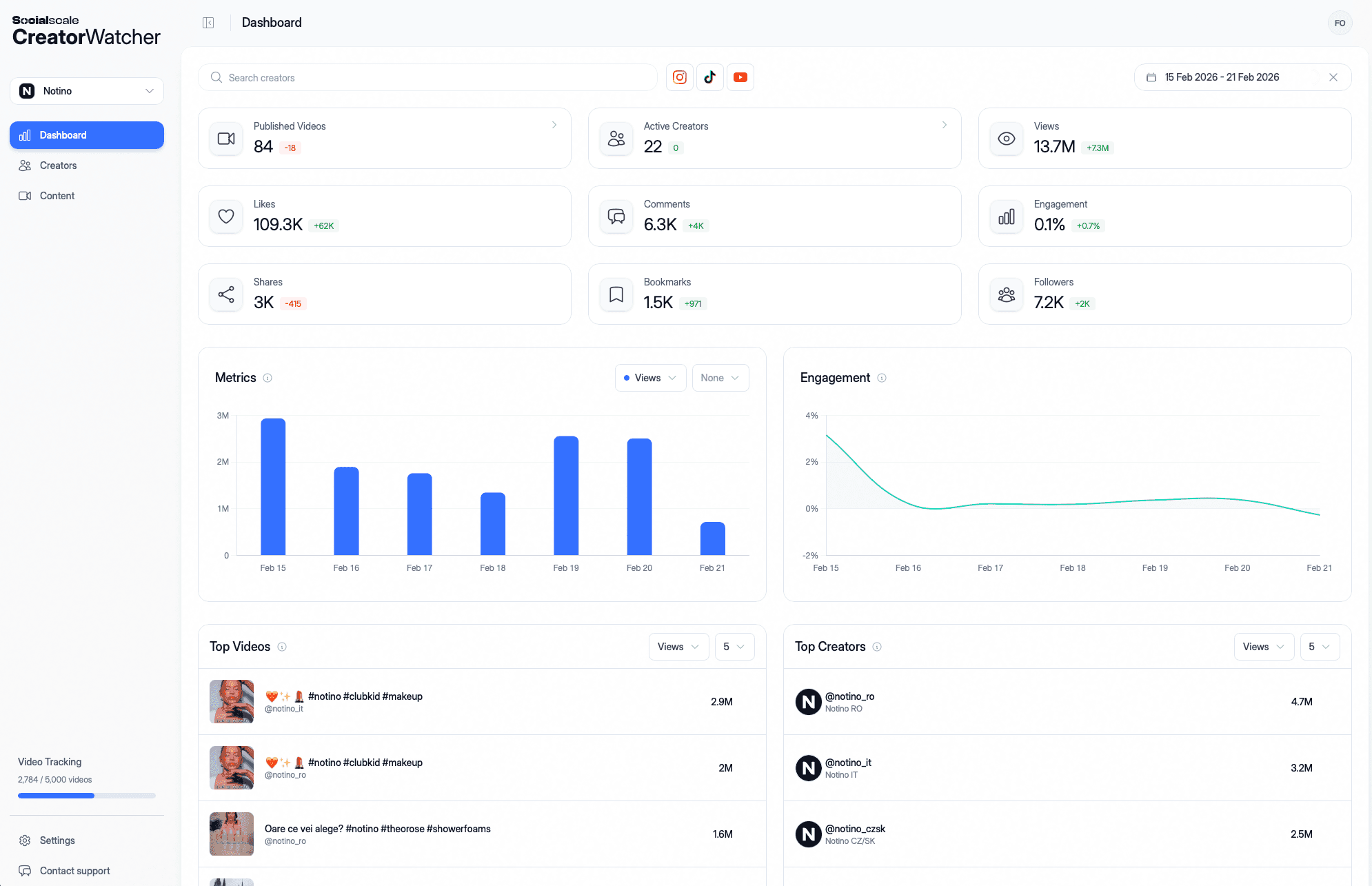
Growth Tracking Challenges DTC Social Media Managers Face
1. Viral Spikes That Disappear Before You Can React
DTC brands live and die by viral moments. A creator in your affiliate program posts a product review that takes off overnight, and by the time you notice, the engagement window has already started closing. Without real-time trend detection, social media managers are always playing catch-up instead of capitalizing on momentum.
2. Always-On Creators Generate Constant, Unstructured Data
Many DTC brands work with always-on creators who post daily across multiple platforms. The sheer volume of content makes it nearly impossible to manually track which posts are driving follower growth, which are underperforming, and which signal a shift in audience sentiment. Without a system to organize this data, social media managers end up buried in notifications with no clear picture of what is actually moving the needle.
3. Affiliate Program Growth Is Hard to Attribute
Affiliate programs are a core growth engine for DTC brands, but tracking the social media performance of dozens or hundreds of affiliate creators is a logistical nightmare. You need to know which affiliates are growing their own audiences, which are generating engagement spikes, and which are stagnating, all across different platforms simultaneously.
4. Cross-Platform Fragmentation Obscures True Trends
A creator might be gaining traction on TikTok while their Instagram engagement drops. A competitor might be shifting budget to YouTube Shorts. When data lives in separate platform dashboards, DTC social media managers cannot see the full trajectory of growth or decline. This fragmentation makes it difficult to spot cross-platform trends that could inform content strategy or partnership decisions.
5. Competitor Benchmarking Lacks Context
DTC brands operate in crowded categories where competitors launch new creator partnerships weekly. Knowing that a competitor gained followers is not enough. Social media managers need to understand whether that growth came from a single viral post, a sustained campaign, or a new affiliate cohort, and whether the trend is accelerating or fading.
6. Reporting Takes Too Long and Misses the Story
Pulling weekly or monthly reports across platforms, creator accounts, and brand channels eats hours that could be spent on strategy. Worse, static reports often miss the narrative: they show what happened but not the trend direction, making it harder to justify budget or pivot quickly.

Why Native Analytics and Manual Tracking Fall Short for DTC Brands
Platform Dashboards Only Show You One Slice
Instagram Insights, TikTok Analytics, and YouTube Studio each give you data about your own accounts on that single platform. They do not let you monitor creator partners, affiliate accounts, or competitors in one view. For a DTC social media manager juggling cross-platform campaigns, switching between dashboards means trends slip through the cracks.
Spreadsheets Cannot Detect Trends in Real Time
Many DTC teams still export data into spreadsheets to compare creator performance week over week. This approach is slow, error-prone, and fundamentally backward-looking. By the time you have updated your tracker, the viral spike has already peaked. DTC brand creator growth analytics require a system that surfaces momentum as it builds, not after the fact.
Generic Social Listening Tools Ignore Creator-Level Signals
Most social listening platforms focus on brand mentions and sentiment, not on tracking the growth trajectory of individual creator accounts. For DTC brands that rely on affiliate creators and influencer partnerships, understanding account-level growth patterns is far more actionable than aggregate mention counts.
Manual Monitoring Does Not Scale With Affiliate Programs
When your affiliate program has 20 creators, you can check their profiles manually. When it grows to 100 or 200, that approach collapses. DTC brands scaling their creator networks need automated tracking that flags which affiliates are trending upward and which need attention, without requiring a team member to scroll through feeds every morning.
Reporting Tools Lack Cross-Platform Trend Context
Tools that aggregate metrics often present flat numbers: total followers, total engagement, total posts. They rarely show rate of change, acceleration, or cross-platform divergence. For a social media manager trying to detect whether a creator partnership is gaining or losing steam, flat numbers are not enough. You need trend lines, not just totals.
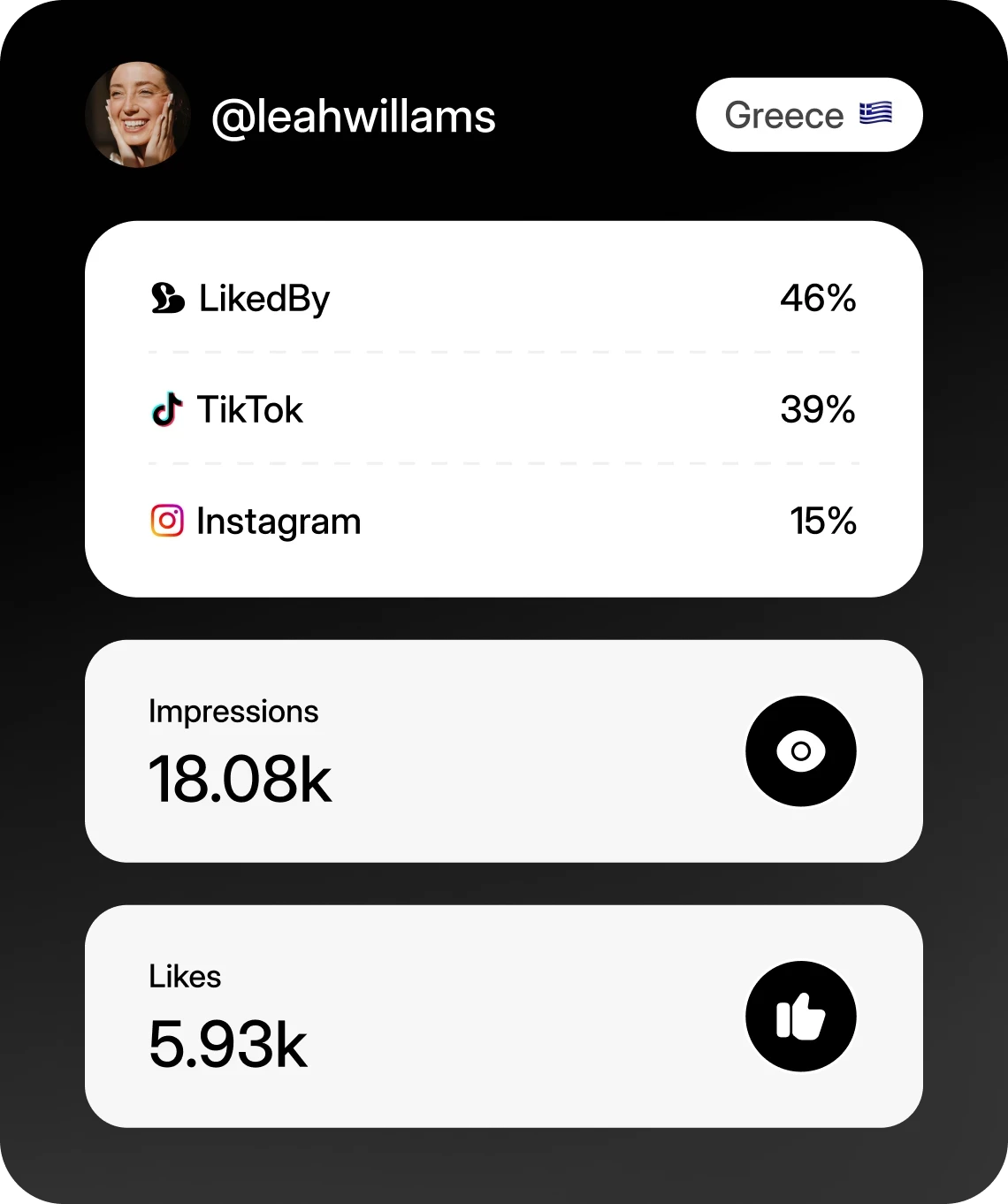
Realistic Use Cases for DTC Social Media Managers
Evaluating Affiliate Creator Momentum Before Renewal
A DTC skincare brand has 80 affiliate creators across TikTok and Instagram. Before renewing contracts, the social media manager uses CreatorWatcher to review each affiliate's growth trend over the past quarter. Creators with accelerating engagement and follower growth are prioritized for renewal and upgraded terms, while those with flat or declining trajectories are flagged for a conversation about content strategy adjustments.
Catching a Viral Spike and Amplifying It
An always-on creator in a DTC fashion brand's network posts a styling video that starts gaining unusual traction on TikTok. The social media manager spots the spike in CreatorWatcher within hours, not days, and coordinates with the creator to post follow-up content while the algorithm is still favoring the account. The brand also reposts the content on its own channels to ride the wave. Without trend detection, this window would have closed before the team even noticed.
Benchmarking Against a Competitor's Creator Strategy
A DTC supplement brand notices a competitor's Instagram following growing faster than expected. Using CreatorWatcher, the social media manager monitors the competitor's tagged creators and identifies that three new fitness influencers have been posting consistently for the past month. This intelligence helps the brand evaluate whether to recruit similar creators or differentiate with a different content angle.
Reporting Cross-Platform Growth to Leadership
A social media manager at a DTC home goods brand needs to present monthly performance to the marketing director. Instead of pulling screenshots from four platforms and building a deck manually, they use CreatorWatcher to generate a structured view of brand account growth, top-performing creator posts, and competitor benchmarks across TikTok, Instagram, YouTube, and Pinterest. The report shows trend direction for each metric, making it easy for leadership to see where momentum is building and where it is stalling.
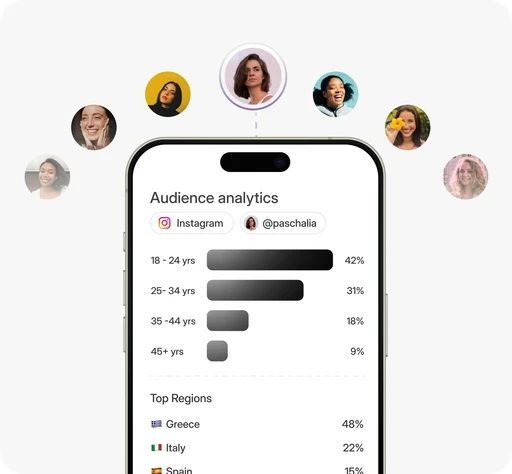
Trend Detection Workflow in 6 Steps
Add Your Brand, Creator, and Competitor Accounts — Start by adding your DTC brand's own social accounts, your affiliate and always-on creator accounts, and key competitor profiles across TikTok, Instagram, YouTube, and any other platforms you monitor. This creates your tracking universe.
Establish Growth Baselines — Let CreatorWatcher collect initial data for each account so you have a baseline for follower counts, engagement rates, and posting frequency. This baseline is what makes trend detection meaningful: you need a reference point to identify acceleration or decline.
Monitor Weekly Trend Signals — Each week, review the trend dashboard to see which accounts are growing faster than their baseline, which are experiencing engagement spikes, and which are slowing down. Focus on rate of change, not just absolute numbers.
Investigate Spikes and Anomalies — When CreatorWatcher flags a burst in follower growth or engagement, drill into the post-level data to understand what caused it. Was it a viral product review? A mention by a larger creator? A platform algorithm boost? This context determines your response.
Act on Trend Insights — Use the trend data to make decisions: amplify content from creators on an upswing, reach out to affiliates whose engagement is dropping, adjust your content calendar based on what is working for competitors, or brief your team on emerging platform shifts.
Build and Share Trend-Based Reports — At the end of each reporting period, compile your findings into a structured report that shows growth trajectories, standout creator performances, competitive shifts, and recommended next steps. Share with stakeholders to align on strategy. Learn more at https://creatorwatcher.com.
Key Performance Indicators for DTC Cross-Platform Growth Tracking
These are the metrics DTC social media managers should monitor consistently to detect trends and evaluate creator and brand account performance across platforms.
Follower Growth Rate (Weekly/Monthly) — The percentage change in followers over a defined period, showing acceleration or deceleration.
Engagement Rate Per Post — Average likes, comments, shares, and saves divided by follower count, tracked over time to reveal trend direction.
Posting Frequency — How often a creator or brand account publishes, which directly affects algorithmic reach and growth trajectory.
Viral Spike Frequency — How often a monitored account experiences engagement or follower bursts significantly above their baseline.
Top-Performing Post Engagement — The engagement metrics of the highest-performing post in a given period, useful for identifying content themes that drive growth.
Affiliate Creator Cohort Growth — Aggregate follower and engagement growth across a defined group of affiliate creators.
Competitor Follower Growth Comparison — Your brand's follower growth rate benchmarked against tracked competitor accounts on the same platform.
Cross-Platform Growth Divergence — The difference in growth rates for the same account across platforms, revealing where momentum is strongest.
Content Type Performance Trend — Engagement trends segmented by content format (Reels, TikToks, Shorts, static posts) to inform content strategy.
Creator Activity Consistency Score — A measure of how consistently an always-on creator posts relative to their historical average, flagging drop-offs early.
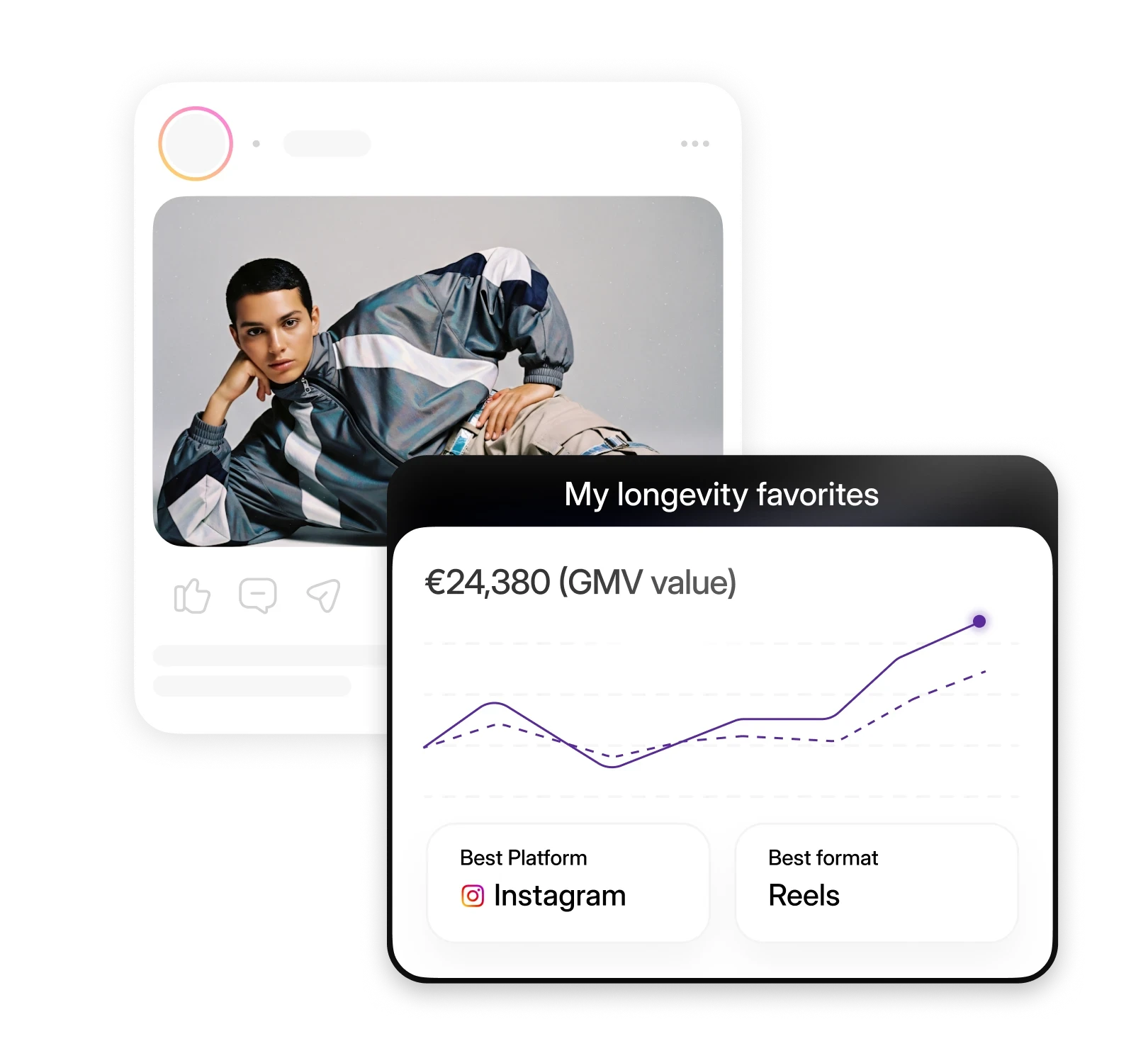
Scenario: A Mid-Sized DTC Brands Team Detects and Capitalizes on Creator Momentum
A mid-sized DTC brands team selling wellness products manages an affiliate program with 60 creators across TikTok and Instagram. Their social media manager had been tracking creator performance manually using a shared spreadsheet updated every Friday. The process took roughly four hours per week and consistently missed mid-week viral spikes from always-on creators.
After adopting CreatorWatcher, the team added all 60 affiliate creators, their own brand accounts, and 10 competitor profiles to the tracking workspace. Within the first two weeks, the tool flagged that three affiliate creators on TikTok were experiencing engagement growth rates 3x above their baseline, driven by a trending audio format they had adopted early.
The social media manager acted within 24 hours: she coordinated with those creators to produce additional content using the trending format and briefed the brand's internal content team to create complementary posts. The goal was to capture the trend window before it peaked. Simultaneously, the team noticed that a key competitor's Instagram growth had stalled while their TikTok presence was accelerating, suggesting a platform strategy shift. This insight informed the brand's own budget reallocation discussion for the following quarter.
By the end of the first month, the team targeted a 50% reduction in manual reporting time and aimed to improve their average response time to viral spikes from 3–4 days down to under 24 hours. The structured trend data also made monthly leadership reports significantly more actionable, with clear growth trajectories replacing flat metric tables.
Frequently Asked Questions
How does CreatorWatcher track growth trends across multiple platforms?
CreatorWatcher monitors publicly visible signals from accounts you add across TikTok, Instagram, YouTube, and other platforms. It collects follower counts, engagement metrics, and posting data over time, then visualizes the rate of change so you can see whether an account is accelerating, plateauing, or declining. This cross-platform view is especially useful for DTC social media managers who need to compare creator performance across channels.
Can I use CreatorWatcher to monitor my affiliate creators?
Yes. You can add any publicly visible creator account to your tracking workspace, including affiliate partners. Many DTC teams group their affiliates into cohorts to track collective growth trends and identify which creators are gaining the most traction. This helps with renewal decisions, tiering, and identifying high-potential partners early.
How quickly does CreatorWatcher detect viral spikes?
CreatorWatcher is designed to flag significant deviations from an account's established baseline. The speed of detection depends on data collection intervals, but the tool is built to surface spikes much faster than manual weekly reviews. For DTC brands where viral moments from always-on creators can drive significant traffic, this early detection is a meaningful advantage.
Does CreatorWatcher replace platform-native analytics?
It does not replace them entirely. Native analytics provide first-party data about your own accounts that no external tool can fully replicate. CreatorWatcher adds value by letting you monitor accounts you do not own, like creator partners and competitors, and by providing cross-platform trend views that native dashboards cannot offer. Most DTC social media managers use both in combination.
What size DTC team benefits most from CreatorWatcher?
Any DTC team that monitors more than a handful of creator or competitor accounts will see value. The tool is particularly useful once your affiliate program or creator network grows beyond what one person can track manually, typically around 20 or more accounts. At that scale, automated trend detection and structured reporting save significant time and surface insights that manual tracking misses.